Best Portrait Mode Slots: How to Choose for One-Handed Play

Best Portrait Mode Slots: How to Choose for One-Handed Play

A slot does not become genuinely mobile-friendly simply because it loads on a phone. The game might force a landscape rotation, use text that is difficult to read, or place important controls where they are awkward to reach with one thumb.

Choosing the Best Portrait Mode Slots requires a quick usability test. You should look at the reel layout, button placement, game information, performance, and how easily you can check or change your limits.

This process takes only a few minutes in demo mode. It can prevent accidental stake changes, misunderstood features, and frustrating sessions spent rotating or repositioning your phone.

Confirm Genuine Portrait Support

Open the game while your phone is upright and make sure the layout reorganizes itself properly. The reels should use the vertical space rather than appearing as a tiny landscape window surrounded by empty areas.

NetEnt’s official embedding documentation provides separate mobile portrait and landscape dimensions, showing how modern game delivery can account for both orientations.

Portrait behavior may still depend on the casino wrapper. Test the complete service rather than only the provider’s demonstration page.

Test One-Handed Thumb Reach

Hold your phone in the position you normally use. Without shifting your grip, check whether you can reach the spin button and other frequently used controls.

You should not need to stretch across the screen to view the paytable or close the game. Frequently used controls are generally more comfortable near the lower half of a vertically held phone.

This is a practical test rather than a guarantee. Hand size, phone dimensions, case thickness, and whether you use your left or right hand will affect the result.

Look for Large Touch Targets

Buttons can look large while having a very small active area. Tap around the edges in demo mode to see whether the interface responds consistently.

Android’s official accessibility guidance recommends that interactive elements have a touch target of at least 48 by 48 density-independent pixels.

Apple similarly recommends layouts that fit the device and interface elements designed for easy, natural touch interaction.

Check Grid Readability

A compact 3×3 slot usually translates naturally to portrait mode. Larger 6×6, 7×7, or expanding grids can still work well, but symbol values and feature counters may become smaller.

Test the game during its busiest feature, not only on the base screen. Multipliers, collector values, sticky symbols, and retrigger meters should remain readable without zooming.

A portrait slot should also use sufficient contrast between symbols, controls, and the background. Elaborate artwork is not useful when it hides the information needed to understand a result.

Verify the Stake and Balance Display

Your current stake and cash balance should be visible before you start a paid round. Avoid interfaces that replace money with unclear credits without showing the equivalent value.

Check where the bet controls are located and whether opening them requires only one deliberate tap. Small controls beside the spin button can increase the chance of selecting the wrong stake.

After changing the amount, close and reopen the menu to confirm that the new value is displayed clearly.

Open the Paytable in Portrait Mode

A usable mobile game must provide more than attractive reels. The rules should explain winning combinations, symbols, RTP information, bonus triggers, and maximum prizes.

UK remote-gambling standards state that restricted display devices should provide explanatory game information through a menu or another accessible link.

Reject games whose help pages require horizontal scrolling, microscopic text, or repeated rotation just to understand the rules.

Test Loading and Interrupted Rounds

Switch briefly between the game and another harmless application during demo play. Return and see whether the screen restores correctly.

Also test the game on both Wi-Fi and your normal mobile connection. Complex video backgrounds and large grids may use more processing power and battery than a simple three-reel slot.

During real-money play, do not tap the spin button repeatedly when a connection freezes. Check the account history after reconnecting to see whether the original round was recorded.

Find the Limit Controls

Portrait convenience can make frequent short sessions almost effortless. That makes easily accessible spending controls particularly important.

Current UK standards require regulated operators to provide financial limits that help customers establish and maintain a gambling budget suitable for their circumstances.

Find the deposit, spending, or loss-limit section before making a payment. The path should be clear from the mobile lobby rather than hidden behind a desktop-only page.

Build a Practical Shortlist

Begin with games whose layouts naturally suit a vertical display. Compact examples include Fire Joker, Mystery Joker, Triple Tigers, Super Joker, and Aztec Gems.

For something more modern, test Guitar Quest or Tower Tumble. These titles contain more feature information, so their suitability will depend more heavily on screen size and casino implementation.

Do not rank a game by maximum win alone. Interface clarity and affordable stake settings matter throughout every session, while the largest payout is usually an exceptionally rare result.

The Best Portrait Mode Slots should fit the vertical screen, keep important controls within reach, and make every stake and result easy to understand. Confirm that the layout genuinely adapts rather than displaying a miniature landscape game.

Test touch targets, grid readability, paytable access, connection handling, and limit controls through free mode. Try both simple 3×3 titles and more advanced mobile grids to discover which format suits your phone.

Before using real money, confirm the exact stake and set a financial limit. One-handed convenience should make the game easier to control-not easier to play without noticing the cost.


How to Safely Play Online Slots on a Mobile Phone

How to Safely Play Online Slots on a Mobile Phone

A smartphone makes online slots available almost anywhere. That convenience can be useful, but it can also make it easier to start playing without checking the website, reviewing the stake, or deciding when the session should end.

Safe mobile play involves more than installing antivirus software. You need to verify the casino, protect your account, avoid insecure connections, understand interrupted rounds, and use financial and time-management tools.

Before you Play Online Slots on a Mobile Phone, complete a few practical checks. They take only a few minutes and can reduce the risk of fake applications, accidental wagers, account access problems, and sessions that continue longer than planned.

Verify the Casino and Domain

Search the operator through the official regulator responsible for your jurisdiction. Confirm its legal name, licence status, trading name, and exact domain.

The Gambling Commission’s business register, for example, can be searched by business name, trading name, domain, or account number.

A footer badge is not enough because logos and licence numbers can be copied. Leave immediately when the listed domain does not match the website you opened.

Protect Your Login Details

Create a unique password containing a mix of characters, and do not use it for another service. Enable two-factor authentication or biometric login when available.

Never share a one-time verification code with casino support, payment agents, or people offering help through social media. Legitimate staff should not need your complete password.

Avoid logging in on a borrowed phone. When that cannot be avoided, do not save the password and remember to remove downloaded documents or screenshots afterward.

Use a Trusted Connection

A private home network or reliable mobile-data connection is safer than open public Wi-Fi. Shared networks in cafés, airports, and hotels can create unnecessary privacy risks.

Check that the casino uses an encrypted connection and that the domain is spelled correctly. Do not ignore browser security warnings.

A virtual private network can also affect location checks or violate an operator’s terms. Do not use one to bypass gambling restrictions or access a casino unavailable in your jurisdiction.

Confirm Every Stake

Mobile screens make accidental taps more likely, especially when the stake selector sits close to the spin or bonus-purchase button.

Check the amount before every new session and after returning from another app. A game may remember your previous stake rather than reopening at its minimum value.

For perspective, 100 rounds at $0.50 represent $50 in total wagering before prizes. Use that calculation to choose a stake that fits your planned budget.

Know What Happens During Disconnections

If the signal drops during a spin, do not tap repeatedly or reload the game several times. The round may already have been accepted by the server.

Check your playing history and balance after reconnecting. Remote systems may need to save event state so interrupted multi-stage games can be recovered.

Take a screenshot and contact official support when the history shows an incomplete or unclear transaction. Include the game, stake, time, and round reference.

Use Mobile Gambling Controls

Set deposit, loss, or spending limits where the operator provides them. Mobile users should be able to access required financial limits, self-exclusion, and other safer-gambling tools without switching to the desktop version.

Time reminders can also prevent a short session from quietly becoming a long one. Regulated guidance recognizes reality checks and tools that restrict spending or session length as ways to help users monitor their gambling.

Choose your limits before depositing, not after losses begin.

Review the Rules and Transaction History

Open the paytable and check the RTP, volatility, maximum win, feature cost, and bonus conditions. Important game and prize information should be available before paid play.

After the session, review your account history rather than relying on memory. British regulated services must provide easy access to at least three months of gambling and account records.

Regular reviews help you see your total spending across multiple short mobile sessions.

Reduce Distractions

Avoid playing while driving, walking near traffic, working, studying, or caring for children. Mobile games are easy to open in situations where your attention should remain elsewhere.

Turn off promotional notifications when they encourage unplanned sessions. You can still access the casino when you have intentionally set aside time and money.

Keep only one game active. British responsible product-design rules do not permit operator functionality designed to let customers play several slot games simultaneously.

To safely Play Online Slots on a Mobile Phone, verify the operator and exact domain before creating an account. Protect your login, use a trusted connection, and inspect the stake whenever you open or return to a game.

When the connection fails, check the recorded result instead of pressing spin repeatedly. Use spending limits and time reminders directly from the mobile service, and review your transaction history after every session.

Avoid public Wi-Fi, unofficial applications, and play during distracting situations. Mobile convenience should support controlled entertainment, so choose your budget and stopping time before opening the casino-and follow both regardless of the results.

When a Progressive Jackpot Is Won: Reset, RTP and Player Impact

When a Progressive Jackpot Is Won: Reset, RTP and Player Impact

A progressive jackpot is shared by more than the eventual winner. Thousands of players may see the same meter, and qualifying wagers across several casinos can contribute to the growing pool.

That raises an obvious question: what happens to everyone else when a Progressive Jackpot Is Won? The short answer is that the prize is recorded, the meter resets, and the network starts building the next jackpot.

However, several technical details sit behind that simple process. The system must handle current prize displays, simultaneous triggers, jackpot contributions, RTP records, and the relationship between the prize pool and the underlying slot. Here is how those parts fit together.

The Meter Returns to Its Seed

A progressive jackpot normally has a predetermined starting value known as its seed. After the top prize is paid, the displayed amount returns to that level.

The seed may be funded by the provider, operator, or a reserve created through the jackpot system. The exact arrangement depends on the product’s published rules.

British technical requirements state that those rules should describe the start-up seed and any maximum or ceiling value.

The Display Must Be Updated

Players should not continue seeing the old prize after it has already been awarded.

Eligible customers must be able to view current jackpot values, and those figures should be updated as frequently as practicable-particularly after a reset following a win.

A short delay may occur because several casino interfaces need to receive the network update. The value should nevertheless reflect the new prize cycle rather than permanently showing the previous total.

Contributions Begin Building the Next Pool

Once the jackpot resets, qualifying gameplay begins growing the new pool.

In a network progressive, activity from multiple operators or titles may contribute to the same jackpot. A local progressive normally draws from a smaller connected group.

The amount can therefore rise at very different speeds. A popular international network may rebuild rapidly, while a single-casino jackpot may move more slowly.

Simultaneous Triggers Need Clear Rules

Two players may appear to activate the same jackpot at almost the same moment. Network latency can make both results look simultaneous even when one reached the central system first.

Jackpot rules should explain how prizes are handled when two or more customers trigger, or appear to trigger, the same pool simultaneously.

Depending on the published design, the prize may be awarded according to the verified sequence, divided, or handled through another defined procedure. Players should never assume the outcome without reading the rules.

The Base Game Continues Normally

The jackpot reset does not usually remove the slot or force the game into a waiting period. The reels can continue operating while a new pool grows.

A recently awarded jackpot does not mean the ordinary game must compensate by producing fewer prizes. Rules, payouts, and outcome probabilities cannot be changed during availability except where the published rules permit a change and customers are informed.

The jackpot meter is smaller, but the game is not necessarily colder.

Jackpot RTP Is Monitored Separately

Progressive jackpots are infrequent and highly volatile. One enormous award can dramatically affect observed results.

The UK Gambling Commission therefore explains that games connected to progressive systems should be measured at base-game level, while jackpot performance is monitored separately. Measuring the progressive component through ordinary short-term RTP data may not be practical because wins are so rare and large.

This also explains why a player cannot estimate jackpot fairness from a few sessions.

The Win May Become Network News

Providers often announce major wins to demonstrate that the progressive system has paid.

Games Global reported that its WowPot network paid €38,461,200.95 in January 2024. The company also reported three WowPot jackpot drops within one week in August 2024.

These announcements confirm historical payouts, but they do not predict when the next jackpot will fall or which player will receive it.

What Should Other Players Do?

Check that the meter has reset and confirm that your chosen stake remains eligible. Read whether the jackpot uses a random trigger, symbol feature, or must-drop ceiling.

Do not increase the stake because somebody else has just won. The previous jackpot does not create a favorable or unfavorable cycle for your next round.

Judge the game through its base RTP, volatility, rules, and affordable minimum stake rather than the size of the previous payout.

When a Progressive Jackpot Is Won, the network confirms the result, updates the display, and resets the prize to its published seed. Qualifying play then begins building the next pool.

The underlying slot can continue operating normally, and the recent win does not automatically change its ordinary payout probabilities. Rules should also explain how simultaneous triggers are resolved and how jackpot values are determined.

Other players should verify the new amount and eligibility requirements but avoid treating the reset as a prediction signal. Read the paytable, calculate your session cost, and play only within a fixed entertainment budget.

Progressive Jackpot Slots: Rules, RTP and Safer Play

Progressive Jackpot Slots: Rules, RTP and Safer Play

A jackpot meter can distract you from the information that matters most. Players may watch the prize climb while overlooking the qualifying stake, trigger rules, RTP breakdown, or whether the game is legally available in their location.

A smarter approach is to read the jackpot like a set of terms rather than a promise. The rules should explain where the money comes from, when the prize resets, what its maximum value is, and how a qualifying result is selected.

Before opening Progressive Jackpot Slots, use the following checks to understand the real cost and conditions behind the flashing meter.

Check How the Jackpot Is Funded

The rules should identify whether contributions come from one game, one operator, or a broader network.

You may see the jackpot rise after normal rounds are played, but that does not mean the entire stake is added to the pool. Only the contribution specified by the game’s mathematical design supports the progressive prize.

UK regulatory guidance requires an explanation of how the jackpot is funded. When this information is missing or unclear, avoid relying on the displayed total alone.

Find the Seed and Maximum Value

The seed is the amount at which the jackpot begins or restarts. The ceiling is the highest value the prize can reach before a must-drop rule or another system condition applies.

A jackpot may reset at $50,000 after paying $1 million. Another might return to a much larger percentage of its previous value.

The seed matters because it determines how attractive the new pool remains immediately after a win. The ceiling matters because it defines the maximum growth allowed under the rules.

Read the RTP Breakdown

A progressive slot’s RTP may be displayed as one complete figure. It may also be divided into the base-game return and the jackpot contribution.

For example, a theoretical total might include a small percentage assigned to a prize that is won very rarely. You should not assume that the full displayed RTP will be experienced through ordinary line wins.

UK standards allow either combined or separated figures, provided the presentation is clear.

RTP remains a long-term theoretical measurement-not a guaranteed return for one deposit or session.

Confirm the Qualifying Stake

Check whether every paid round can activate the jackpot. Some games have minimum stakes, required paylines, or optional jackpot bets.

Increasing the stake may raise the value of ordinary prizes without improving the jackpot probability. In another game, it may change the chance or provide access to an enhanced feature.

Only the current paytable can tell you what applies. Never assume that the largest available stake creates the best value.

Understand the Trigger

The jackpot can activate randomly or through a dedicated bonus.

Mega Joker awards its progressive prize on a randomly selected round, while Mega Fortune uses three Bonus symbols to open a wheel containing three jackpot levels.

Divine Fortune takes another approach by collecting bonus coins and awarding different jackpots according to the number of completed rows.

A visible near miss does not mean the progressive prize is due. Future results remain governed by the game’s random system.

Look for Testing and Clear Rules

A legitimate progressive system should be technically capable of delivering the stated RTP and jackpot trigger.

The UK Gambling Commission’s testing strategy says approved test houses should verify jackpot design and trigger functionality. Its technical standards also require jackpot rules to be clearly available before a customer commits to play.

Use a casino licensed for your jurisdiction and verify the licence through the regulator’s official register rather than trusting a footer logo.

Calculate Your Real Playing Cost

The rising jackpot is not the amount you are spending. Your cost comes from the stake multiplied by the number of paid rounds.

At $0.50 per spin, 100 rounds create $50 in total wagering before any returned prizes. At $2 per round, the same session creates $200 in turnover.

This calculation is more useful than watching the meter. It shows how quickly your planned budget can be used in a highly volatile game.

Treat the Jackpot as Rare Entertainment

Progressive prizes are designed to be uncommon. A network can award enormous amounts while millions of other qualifying rounds do not win the top tier.

Do not interpret a high meter, recent jackpot news, or must-drop ceiling as a reason to continue beyond your limit. The next eligible round may still lose.

The ordinary game must be enjoyable enough to play without expecting the progressive prize. Otherwise, the jackpot is controlling the session rather than adding entertainment to it.

Understanding Progressive Jackpot Slots requires reading more than the current prize total. Check how the pool is funded, its seed and ceiling, the qualifying stake, and the exact jackpot trigger.

Review whether RTP is displayed as a combined percentage or separated into base-game and progressive components. Verify that the game is offered by a licensed operator and tested under the relevant rules.

Before playing, calculate the cost of 50 or 100 rounds at your chosen stake and set a firm stopping point. Treat the jackpot as an extremely rare bonus-not a target that becomes more achievable through longer play.

Multipliers in Online Slot Games: How to Read the Rules

Multipliers in Online Slot Games: How to Read the Rules

A 100x symbol lands on the reels, yet the balance barely changes. This can feel confusing until you realize that the multiplier may not have formed part of an eligible win.

Slot multipliers always operate under specific conditions. Some need a winning tumble, while others must substitute for a symbol on an active payline. A running value might also reset before the combination you were hoping for appears.

Learning how to read Multipliers in Online Slot Games is more useful than memorizing the largest advertised number. By checking a few key rules, you can understand what the feature actually does and calculate its results correctly.

Find Out What Activates the Multiplier

Start by identifying whether the multiplier lands randomly or requires another event. It might appear as a wild, activate after consecutive cascades, or become available only during free spins.

In Sweet Bonanza 1000, multiplier bombs are active during the bonus game and matter when a successful tumble occurs. The values remain visible during that sequence and are then added together.

A multiplier appearing during a non-winning result may provide no payout. It does not necessarily carry into the next round.

Identify Which Win It Affects

The rules should state whether the value applies to one line, one cluster, one tumble, or the complete round.

A multiplier wild usually needs to participate in a winning combination. By contrast, a total-win multiplier may apply after every eligible symbol payout has been added together.

Wild Wild Riches applies a random 2x, 3x, or 5x multiplier from reel five to the total win. That differs from a wild that boosts only the specific payline in which it appears.

Check How Multiple Values Combine

Never assume that two multipliers are added. Some games multiply them together, while others use only the largest value.

If a 2x and 4x symbol are added, the result is 6x. When multiplied, the same symbols create 8x.

Wild West Gold adds participating multiplier wild values together. Godbreaker can multiply multiple wild values together instead.

This single rule can make a major difference to the final calculation.

Determine Whether Values Persist

Find out exactly when the multiplier resets. It may last for one winning combination, one tumble sequence, the current spin, or the entire bonus.

Sugar Rush 1000 keeps marked grid positions and their multipliers during its free-spins feature. Repeated wins on the same locations can increase those values up to 1,024x.

Other games reset the running value as soon as a paid round ends. A large multiplier built during one spin may therefore provide no benefit to the next.

Look for Caps and Maximum Values

A game may limit the individual multiplier, the combined multiplier, or the maximum total payout.

Gates of Olympus 1000 offers individual symbols reaching up to 1,000x. Sweet Bonanza 2500 increases its available candy-bomb value to 2,500x.

These are upper limits, not expected results. The maximum payout can also end a game round automatically, even if additional spins or features appeared to remain.

Check both the multiplier cap and the overall win cap in the paytable.

Separate Multipliers From RTP

A game with larger multipliers does not automatically have a higher RTP. The mathematical model can balance large prizes through lower trigger frequency, smaller base payouts, or increased volatility.

RTP is measured across extensive play and cannot predict what one player receives during a short session.

Compare the exact RTP version offered by the casino. Do not rely only on the multiplier or maximum-win headline when assessing the game.

Use Demo Mode to Confirm the Calculation

Open an official demo and keep the paytable visible. Watch when multiplier symbols appear, whether they remain after a cascade, and which combinations they actually increase.

Pause after a successful round and calculate the result manually. Compare the base symbol payout, combined multiplier, stake, and final award.

Regulated game information should explain the rules, how winners are determined, and the possible prizes before play. Choose another title when the calculations remain unclear or the information is incomplete.

To understand Multipliers in Online Slot Games, read beyond the number printed on the symbol. Determine what activates it, which winning amount it affects, and whether several values are added or multiplied.

Check how long the value remains active and whether individual or overall caps apply. Remember that a huge multiplier does not automatically mean higher RTP or frequent large wins.

Use demo mode to observe the calculation and compare it with the paytable. Before real-money play, confirm the exact stake and set clear spending and time limits. A transparent, understandable feature is more valuable than an impressive number you cannot properly evaluate.

What Are Scatter Symbols? How to Read Their Rules

What Are Scatter Symbols? How to Read Their Rules

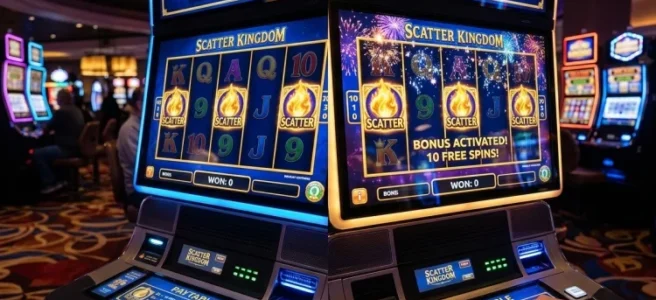
Three matching icons appear across the reels, but nothing happens. In another game, the same number instantly opens ten free spins. This difference can confuse players who assume all scatter symbols follow one standard rule.

They do not. To understand what are scatter symbols in a particular slot, you need to read its information screen carefully. The paytable explains how many are required, where they may land, whether they pay independently, and what happens during the bonus.

Learning to find these details takes only a few minutes. It is much more reliable than guessing from the symbol’s appearance or relying on rules from a different game.

Identify the Correct Scatter Icon

Begin with the symbol table. A scatter may display the word “SCATTER,” but many games use an image connected to their theme.

Book of Dead uses the Book as its scatter, while Sweet Bonanza uses a lollipop. The Diamond symbol performs the role in NetEnt’s Superstars.

Do not confuse the scatter with a wild, jackpot, collector, or ordinary high-value symbol.

Check the Minimum Trigger Count

Find out exactly how many scatters are needed. Three is common, but many modern games require four.

Book of Dead awards ten free spins from three scatter symbols. Sweet Bonanza needs four to six scatters to activate its bonus.

The trigger count can also change between the base game and free spins. A bonus that begins with four scatters may retrigger with only three.

Confirm the Eligible Positions

The phrase “scatter pays anywhere” can be misleading when a symbol appears only on certain reels.

Check whether the scatter can land on every reel, only on the middle reels, or in selected rows. Also find out whether multiple symbols can appear on one reel.

A scatter count may be based on total symbols or the number of reels containing at least one. These methods can produce different outcomes, so the paytable wording matters.

Find Out Whether the Scatter Pays

Some scatters only activate features. Others also provide direct prizes.

Sweet Bonanza’s lollipops award between three and 100 times the stake when four to six land, alongside ten free spins.

Check whether the prize is shown as a stake multiplier, a fixed credit value, or a paytable amount. When credits are used, confirm their real-money equivalent before playing.

Read the Free-Spin Award Table

A game may award more spins for additional scatters. For example, four symbols could provide ten rounds, five could award 15, and six could provide 20.

Other games always award the same number, regardless of how many extra symbols appear. In Sweet Bonanza, four to six standard scatters trigger ten free spins, although the direct scatter payout increases.

Never assume that landing more scatters automatically means more rounds.

Check the Retrigger Conditions

Look for a separate rule explaining what happens when scatters land during free spins.

Book of Dead requires three scatters to add another ten free spins. Sweet Bonanza 1000 awards five additional rounds from three lollipops during its feature.

Confirm whether retriggers are unlimited, capped, or available only once. Also check whether bonus multipliers and collected values remain active afterward.

Separate Scatters From Wilds

Wild symbols commonly replace regular icons. Scatters usually activate bonuses or provide special scatter prizes.

A wild does not normally replace a missing scatter. The exception is when the paytable states that substitution is allowed, as with the Dice symbol replacing a Diamond scatter in Superstars.

Some symbols can officially act as both wild and scatter, but this dual function must be written clearly in the rules.

Do Not Use Scatters to Predict Results

Seeing two scatters does not mean the third is close. It is still a losing or non-triggering result unless the paytable awards something for two.

Previous near misses do not make a future bonus more likely. The scatter probability is part of the game’s mathematical model and random result generation.

Use the symbol rules to understand what happened, not to create a strategy for predicting when the next feature will appear.

Verify the Current Game Version

Similar titles can have different scatter mechanics. Sweet Bonanza, Sweet Bonanza 1000, Sweet Bonanza 2500, and Sweet Bonanza Super Scatter use related imagery but do not apply identical rules.

Regulated British online games must provide information about their rules, prizes, and likelihood of winning.

Prioritize the information screen inside the exact version you opened rather than an old review or another game in the same series.

To understand scatter symbols, start with the paytable. Identify the correct icon, minimum trigger count, eligible positions, direct payout, free-spin award, and retrigger conditions.

Check whether wilds can substitute and whether the scatter performs another role, such as upgrading the bonus or paying a fixed award. Do not treat two visible scatters as evidence that another one is due.

Before your first paid round, review the complete rules and test unfamiliar features with virtual credits where possible. Clear information-not symbol patterns-should guide your choice of game, stake, and session limit.

Online Slot Myths Debunked: A Smarter Player’s Guide

Online Slot Myths Debunked: A Smarter Player’s Guide

Slot myths are not always created by dishonest marketers. Many develop naturally when players try to explain a surprising result.

A bonus lands immediately after changing the bet, a near miss appears several times, or a demo session performs better than a later cash session.

The problem is that coincidence can feel like evidence. Once a player believes they have discovered a pattern, every matching result strengthens the belief while contradictory outcomes are quickly forgotten.

This guide examines Online Slot Myths involving timing, strategies, near misses, demo games, and casino control. Understanding these claims helps you evaluate slots through published rules and verified information rather than superstition.

Myth: Certain Times of Day Pay Better

Some players believe slots become more generous late at night, on weekends, or when the casino has more active users.

A standard RNG does not need to know whether you are playing at noon or midnight. It produces numerical output that the game maps to available outcomes.

Regulated random games should generate unpredictable results according to fixed probabilities, without adaptive changes based on recent activity.

Myth: Stop Buttons Can Change the Result

A button that speeds up or stops the reel animation may create the feeling that timing matters. In software slots, the underlying result is normally selected through the game system rather than through physical reflexes.

Pressing stop can shorten the visual presentation where such functionality is allowed, but it does not provide reliable control over the mapped outcome.

In Great Britain, quick-spin and slam-stop features are not permitted, reflecting broader rules intended to reduce misleading impressions and excessive play speed.

Myth: Near Misses Mean a Win Is Close

Two bonus symbols followed by a third symbol landing just outside the visible payline can feel like progress. It is still a losing outcome unless the rules award something.

A near miss does not indicate that the next round has a higher probability of triggering the feature. The new result is generated according to the same mathematical model.

UK standards specifically prohibit replacing an ordinary losing result with a false near-miss display designed to mislead customers about their chances.

Myth: A Strategy Can Beat the RNG

Changing games after five losses, increasing the bet after a small win, or following a fixed spin sequence may provide structure. It cannot predict secure random output.

NIST describes cryptographic deterministic random generators as producing output intended to be unpredictable when the secret seed is unknown.

A staking system can change the size and speed of your financial exposure. It cannot remove the game’s mathematical advantage or force the next bonus to appear.

Myth: Demo Mode Is Always Rigged to Win

A free-play balance can last longer than real money simply because virtual losses feel less important. Players may also experiment with larger virtual bankrolls and remember unusually good demo sessions.

Where a regulated operator offers corresponding free and paid versions on the same facility, the free game should use the same rules and accurately represent the cash game’s prize distribution.

Separate promotional demonstrations may operate differently, but higher-return showcase versions should be labelled accordingly.

Myth: Casinos Turn Individual Accounts On and Off

Players sometimes believe an operator changes their personal odds after a withdrawal, deposit, or winning session.

Licensed random games should not adjust outcome probabilities according to earlier play. Technical requirements prohibit automatic or manual intervention that changes the chances during play outside clearly described bonus rules.

Casinos may choose among approved configurations before offering a game. That is why checking the exact in-game RTP remains important, but it is different from changing your personal results after every action.

Myth: Celebratory Sounds Always Mean You Won

A slot may return less than your original stake while displaying flashing lights and upbeat sounds. For example, a $1 spin returning $0.40 is still a net loss of $0.60.

In Great Britain, remote games must not celebrate returns that are equal to or lower than the total amount wagered.

Players in other markets should compare the award with the stake rather than relying on the animation. The balance movement reveals the real financial result.

Myth: A Licensed Game Cannot Produce Long Losses

Licensing and testing are designed to support fair operation, not to guarantee comfortable sessions.

Random games can produce long losing sequences, especially when volatility is high. Operators monitor actual RTP and outcome distribution across large volumes because individual sessions are too small to evaluate reliably.

A severe personal loss does not automatically prove manipulation. It does show why limits are necessary before the first spin.

The most persistent Online Slot Myths turn visual effects and random coincidences into supposed strategies. Playing at a lucky time, stopping the reels, following near misses, or changing the stake cannot reliably predict a secure RNG.

Regulated demo games should represent their cash equivalents accurately, while licensed software should not adjust your personal probabilities according to earlier results. Still, fairness does not prevent major losses.

Read the exact rules and RTP, compare each award with the amount wagered, and verify the casino through its regulator. Use a fixed entertainment budget and stop according to your plan-not according to a pattern the game appears to show.

Are Online Slot Games Really Random? Myths and Facts

Are Online Slot Games Really Random? Myths and Facts

Random results can be difficult to accept because the human brain naturally looks for patterns. After six losing spins, the next one feels more likely to win. After watching somebody hit a large prize, the game suddenly seems empty.

These beliefs make slot sessions feel predictable even when they are not. The question Are Online Slot Games Really Random? therefore involves more than explaining the software. It also means separating real game rules from assumptions created by short-term results.

Licensed slots should use tested random systems, but randomness can still produce streaks, repeated symbols, and frustrating near misses. Let’s look at the most common myths.

Myth: A Bonus Becomes Due After Many Losses

A long losing sequence does not normally increase the probability of the next ordinary spin.

Suppose a bonus has a hypothetical one-in-200 probability on each round. Missing it 199 times does not mean the 200th round must activate it. The probability applies each time under the game’s rules.

UK standards prohibit adaptive behavior that changes probabilities according to earlier results.

Myth: A Recent Jackpot Makes the Slot Cold

Players sometimes leave a game after seeing somebody win because they believe it needs time to recover.

A standard random game does not need to punish the next player to balance a previous prize. The following result is selected through the same approved process.

A progressive jackpot meter may reset after being won, but that visible reset is different from secretly making normal combinations less likely.

Myth: Pressing Spin at the Right Moment Helps

Waiting three seconds, tapping the button to a rhythm, or playing at midnight does not reveal the next random value.

Software RNGs can produce sequences from a secret seed, with properly designed systems intended to remain unpredictable when that seed is unknown.

The reel animation displays the selected result. It does not provide a reliable physical timing skill similar to throwing a ball or stopping a wheel by hand.

Myth: Raising the Stake Resets the RNG

Changing your stake does not generally erase previous rounds or place the RNG into a more favorable cycle.

A higher stake usually increases both the cost of the round and the monetary value of stake-based prizes. Some games may have jackpot eligibility, feature modes, or paytable changes linked to particular stakes.

Any genuine difference should be described in the game rules. Never increase a bet because a bonus looks close.

Myth: Demo Games Always Pay More

It is often claimed that every free demo is programmed to produce more wins so players will deposit.

In Great Britain, a play-for-free game corresponding to a real-money title must accurately represent the likelihood and distribution of prizes. It should use the same rules and suitable random determination without systematic bias.

Rules can differ elsewhere, and independent promotional simulations may not be identical to casino demos. Use official provider or licensed-operator versions whenever possible.

Myth: RTP Predicts Your Personal Return

A theoretical RTP of 96% does not mean every $100 session returns $96.

RTP is an average expected across a significant amount of play. Short-term results can be much higher or lower, especially in volatile games. Operators monitor performance over suitable volumes rather than judging a game by one player’s session.

The percentage is useful for understanding the mathematical design, not predicting tonight’s result.

Myth: Random Means Every Prize Is Equally Likely

Random selection does not require a jackpot and a low-value symbol to have the same probability.

The game can map many numerical outcomes to common icons and only a tiny number to rare prizes. The RNG still chooses from the complete range without knowing which symbol the player wants.

What matters is that the mapping matches the approved mathematics and is applied consistently.

Myth: The Casino Manually Chooses Losing Spins

A properly regulated operator does not need a staff member to approve each round. The software automatically uses RNG output and the game rules to determine the result.

Technical standards require random output to be used appropriately and prohibit adaptive systems designed to compensate according to previous play.

That protection depends on regulation and testing. An unknown offshore website may not provide the same assurance.

How to Protect Yourself

Check the operator through the official register of the regulator serving your jurisdiction. Confirm the provider and read the information shown inside the exact game.

Avoid systems claiming to predict slot cycles, reveal hot times, or guarantee bonus triggers. A person cannot reliably forecast a secure RNG by watching a handful of visible outcomes.

Set your budget and stopping point before beginning. Randomness means you cannot know how quickly that budget may be lost.

So, Are Online Slot Games Really Random? On a properly licensed platform, the game should use tested random technology and follow an approved mathematical model.

Losing streaks do not make bonuses due, recent jackpots do not create cold periods, and spin timing does not provide a reliable advantage. RTP describes long-term design rather than your personal refund, while random does not mean every prize has equal probability.

Use this knowledge to reject betting systems built on imaginary patterns. Verify the operator, read the rules, try an official demo, and play only with money already set aside for entertainment-not money you need to recover.

Megaways Slots vs Cluster Pays Slots: Features and Value

Megaways Slots vs Cluster Pays Slots: Features and Value

The biggest number on a slot page does not always reveal the best game. A Megaways title may advertise more than 100,000 possible ways to win, while a cluster game may promise enormous connected groups and repeated symbol drops.

Those figures describe how the game works, not how much an individual player will receive. A proper comparison of Megaways Slots vs Cluster Pays Slots should also consider RTP, volatility, stake size, feature complexity, screen readability, and the pace of play.

This guide provides a practical framework for comparing both mechanics without assuming that either format produces better results simply because it looks busier.

Compare the Core Win System

Megaways games usually award combinations across consecutive reels. The exact number of winning ways changes because each reel can show a different number of symbols.

Cluster games pay for connected groups. In Reactoonz, five or more matching aliens must touch horizontally or vertically on its seven-by-seven grid.

Ask which system is easier for you to recognize. A game should not require you to guess why a payout occurred.

Understand What the Headline Numbers Mean

A Megaways game offering up to 117,649 ways does not create that maximum number on every spin. The total depends on the number of active symbols appearing across its reels.

Similarly, a large cluster grid does not mean that every section of the screen can produce a prize. Matching symbols must connect according to the game’s rules.

Bonanza and Pirate Pays both advertise up to 117,649 ways, while Reactoonz requires connected groups of at least five symbols.

These figures describe structure rather than guaranteed value.

Check RTP Inside the Game

RTP represents the game’s designed long-term return percentage. Actual short sessions can finish far above or below that number.

The UK Gambling Commission explains that actual RTP should approach the theoretical figure only after a significant amount of play. The amount of normal variation also depends on volatility.

Do not assume that one mechanic has a standard RTP. Check the player-facing rules of the exact version available through the operator.

Review Volatility and Prize Distribution

Volatility explains how widely a game’s results can move around its mathematical average. Higher-volatility games may place more of their value in uncommon large outcomes.

Many famous Megaways and cluster titles are designed for dramatic feature potential, but visual style alone does not establish volatility. Two similar-looking games can have very different mathematical models.

A short demo can show the pace and interface. It cannot provide enough data to confirm the frequency of large prizes.

Examine the Cascade Mechanics

Cascading wins appear frequently in both categories. Winning symbols disappear, and replacement icons enter without requiring another paid spin.

Bonanza uses reactions across its Megaways reels. Reactoonz uses a similar process after a successful cluster, while Retro Tapes tumbles new symbols into its six-by-nine board.

Check whether multipliers increase during consecutive cascades. Some games reset them after every paid round, while others preserve them during free spins.

Compare Bonus Complexity

Megaways games often use scatter-triggered free spins with an increasing multiplier. Some titles add bonus buys, feature gambles, or special bets where legally available.

Cluster games frequently use wild meters, symbol collectors, persistent positions, and random modifiers. These systems may activate in the base game instead of existing only inside free spins.

More features do not automatically mean more value. They can improve variety, but they may also make the rules harder to understand.

Calculate the Cost of Your Playing Pace

Focus on total wagering rather than the number of features or cascades. One $0.50 paid round still costs $0.50 when it creates several consecutive symbol drops.

At $0.50 per round, 100 paid spins create $50 in total wagering before returns are considered. At $0.20, the same number creates $20.

Quick-spin settings, short animations, and automatic cascades can make the total rise faster than expected. Check your balance regularly and take breaks.

Test Mobile Usability

Variable reel heights may cause Megaways symbols to become smaller when the maximum number of positions appears. Large cluster grids can also look crowded on compact screens.

Open the paytable and confirm that text, controls, meters, and multipliers are readable. Test the game in both supported orientations and avoid interfaces where changing the stake feels too easy.

The best mobile game is the one that presents every important rule and control clearly.

A useful Megaways Slots vs Cluster Pays Slots comparison considers much more than win ways or grid size. Megaways uses changing reel positions, while Cluster Pays rewards connected groups.

Both can include cascades, free spins, multipliers, and complex bonus systems. Check the exact RTP, volatility, minimum stake, maximum bet, and feature rules before choosing.

Calculate how much 50 or 100 paid rounds would cost at your preferred stake, then test the interface with virtual credits. Select the mechanic whose results remain clear and entertaining, and never let a large maximum-win figure determine your spending decisions.

Slot Game Review Checklist: What Smart Readers Verify

Slot Game Review Checklist: What Smart Readers Verify

A good online review should save you time. Instead of opening several game pages and trying to decode every feature, you should receive a clear summary of what the slot offers and whether it matches your preferences.

The difficulty is that reviews vary widely in quality. One article may contain genuine testing notes and verified specifications, while another may repeat promotional text and use a numerical rating with no explanation.

This practical Slot Game Review checklist shows what to verify before accepting an article’s verdict. It focuses on evidence, mathematical accuracy, usability, transparency, and the details that can influence the real playing experience.

Verify the Writer’s Source

Start by checking where the information came from. The strongest sources are the in-game rules, the developer’s official page, recognised regulators, and genuine first-hand testing.

Third-party databases can support research, but technical claims should ideally be confirmed through a primary source.

Google encourages reviewers to demonstrate expertise and provide evidence showing how the product was tested.

Confirm the Exact Game Version

Similar titles may belong to different sequels, jackpot editions, or mathematical configurations. The review should include the full title and provider.

Check the publication and update dates. A game’s RTP, availability, or casino integration may change after an article is published.

Player-facing rules are particularly valuable because regulated games can display the designed RTP within their help material.

Check the Essential Specifications

A useful review should cover more than the theme. Look for reels, rows, paylines or winning ways, stake range, theoretical RTP, volatility, maximum win, wilds, scatters, and bonus triggers.

The article should also explain unusual systems such as clusters, cascades, collectors, expanding grids, or progressive jackpots.

Missing details are not automatically evidence of dishonesty, but the writer should acknowledge when information could not be verified.

Look for Accurate Mathematical Context

The RTP should be presented as a theoretical long-term average. It should not be connected to a promise that one player will receive a particular return.

The review should also separate RTP from volatility. Two games can share the same return percentage while producing very different short-term rhythms.

For progressive games, jackpot contribution may be included in the total RTP or displayed separately. UK standards permit both approaches, provided the information is clear.

Examine the Feature Explanation

The reviewer should explain what triggers the main bonus and what happens after it begins.

Vague statements such as “the free spins can be very rewarding” provide little value. A stronger description identifies the number of initial spins, multiplier behavior, retriggers, sticky symbols, or collector rules.

When the feature was not triggered during testing, the writer should say so and rely on official documentation rather than inventing personal observations.

Assess Mobile and Interface Coverage

Look for comments about loading, navigation, readability, stake controls, sound settings, and access to the paytable.

Mobile testing matters because a feature-heavy game may feel smooth on a desktop but cluttered on a phone. The review should name the device or platform used so readers understand the limits of the observation.

It is also useful to mention whether the game offers portrait and landscape support.

Read the Pros, Cons, and Verdict

Advantages should be specific. “Clear bonus rules” is more informative than “great gameplay.” Disadvantages should also be genuine rather than disguised compliments.

The final verdict should explain who may appreciate the game. For example, a simple payline title may suit beginners but feel limited to people who enjoy layered bonus systems.

Google recommends evaluating products around the most important decision-making factors and explaining what makes something suitable for a particular purpose.

Check Disclosure and Responsible Language

Find out whether the publisher receives affiliate commissions, sponsorship, or free access. The FTC recommends placing disclosures close to the endorsement or link so readers can understand the relationship.

The language should also avoid promises of guaranteed wins, easy income, or strategies for recovering losses.

A responsible article helps readers understand entertainment features and risk without pressuring them to register immediately.

A reliable Slot Game Review should pass several basic checks. Verify its sources, testing notes, publication date, game version, technical specifications, feature explanations, mobile observations, and commercial disclosures.

RTP must be presented as a long-term theoretical figure, while volatility and jackpots need separate context. Look for genuine advantages and disadvantages rather than an article that praises every element.

The final verdict should describe the intended audience instead of simply declaring the game “the best.” Before acting on any recommendation, compare the review with the in-game information and use a free demo where available. Independent verification remains the smartest final step.